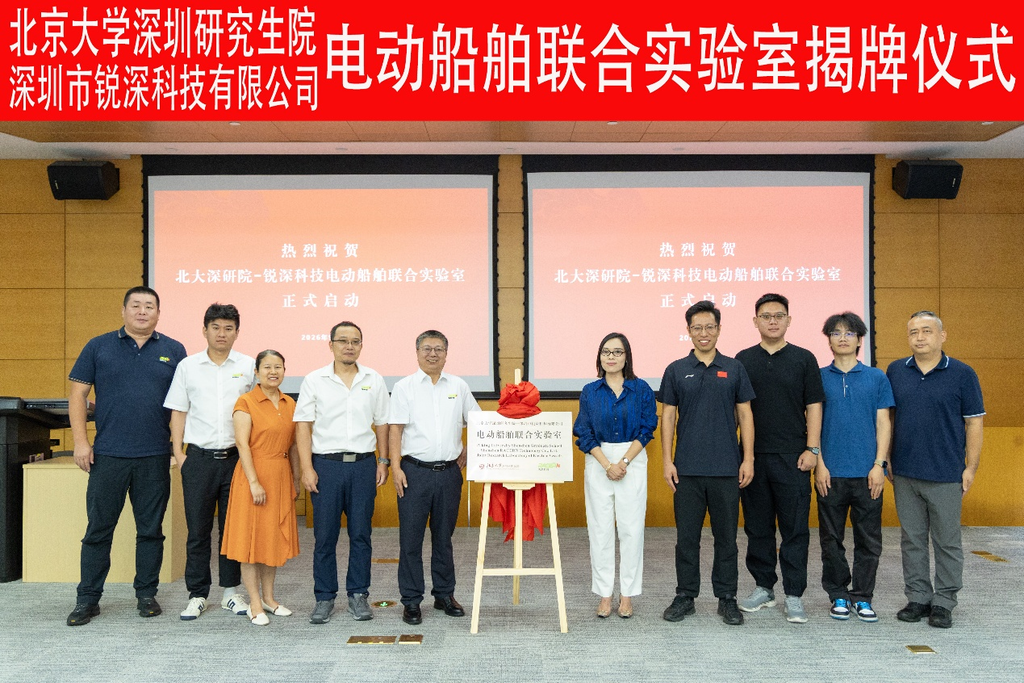
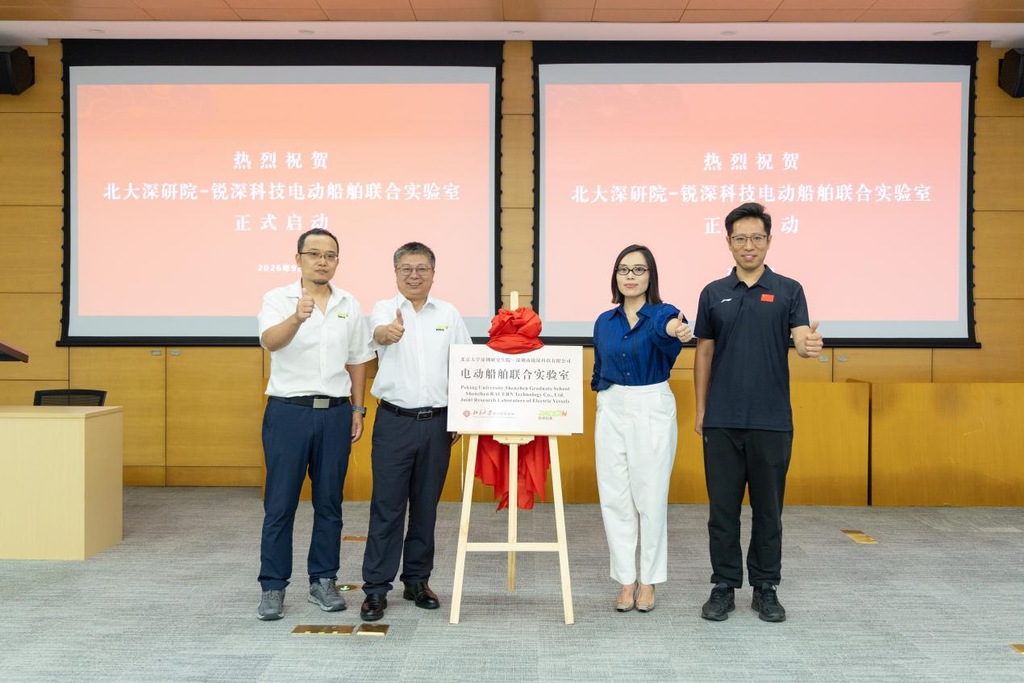
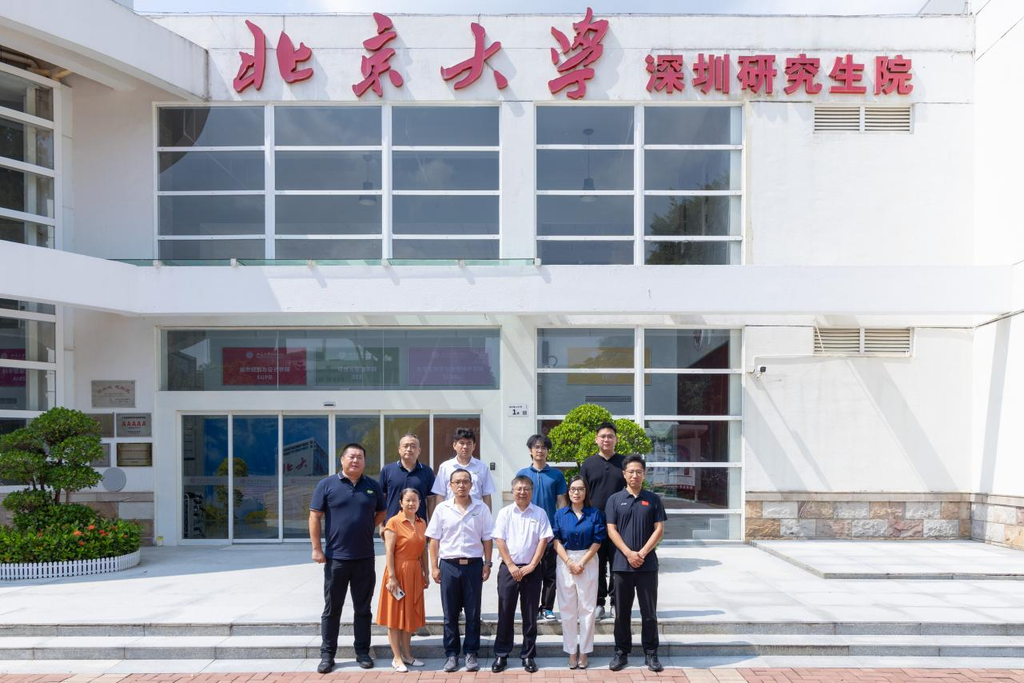
On September 30, Racern Chairman Zhang Yueqi and Vice Chairman Liu Hailong led a delegation to Peking University Shenzhen Graduate School for discussions with university representatives. The two sides jointly unveiled the Peking University Shenzhen Graduate School–Racern Electric Ship Joint Laboratory. Shi Lili, Director of the Office of Scientific Research at Peking University Shenzhen Graduate School; Chen Yingjie, Associate Research Fellow at the School of Advanced Materials and Head of the Joint Laboratory; and other relevant personnel attended the event.
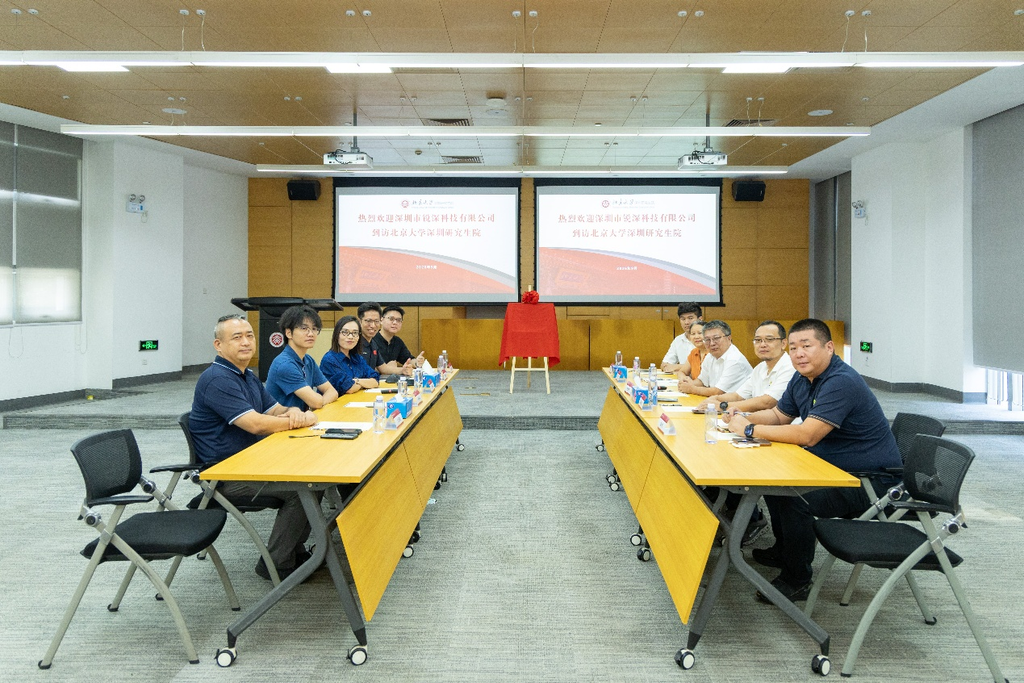
During the discussions, Zhang Yueqi noted that battery state estimation, system reliability, and thermal safety fault warning remain key challenges for large-scale application in the industry. He expressed the hope that the joint laboratory would serve as a bridge, combining Peking University Shenzhen Graduate School’s research strengths with Racern’s industrial and application experience to tackle real-world industry problems and provide technical support for the high-quality development of green shipping.
Shi Lili welcomed the Racern delegation and introduced the graduate school’s positioning, disciplinary directions, research platforms, and mechanisms for translating research outcomes. She said that Peking University Shenzhen Graduate School follows a problem-oriented, North-South collaborative, AI-driven, and integration-focused approach. Its research is guided by real industry needs while drawing on its strengths in basic research to connect zero-to-one innovation with industrial application. In 2026, the graduate school has already launched 15 university-industry joint laboratories. The new laboratory with Racern, she said, is another example of complementary strengths and mutual benefit.
Chen Yingjie then presented the laboratory’s positioning, development path, and phased goals. The laboratory will address the development needs of green shipping and the electric ship industry, advancing in phases the R&D and engineering application of key power battery technologies for electric ships. It will focus on fundamental state perception, intelligent energy management, fault diagnosis, and safety early warning, with the goal of gradually building an intelligent battery management technology system for real-world application scenarios. The laboratory will also leverage Peking University Shenzhen Graduate School’s research strengths and Racern’s engineering and application-scenario expertise to build an industry-academia-research collaborative innovation platform integrating technology R&D, technology transfer, and talent development.

The two sides also held in-depth discussions on key technical challenges in the electric ship industry, collaborative project development, intellectual property sharing, and the commercialization of research outcomes. After the meeting, they jointly unveiled the Peking University Shenzhen Graduate School–Racern Electric Ship Joint Laboratory, marking the official start of substantive industry-academia-research cooperation. With this unveiling as a new starting point, Racern will continue to deepen collaborative innovation with Peking University Shenzhen Graduate School, drive the validation and application of more technological achievements in real-world electric ship scenarios, and contribute to the high-quality development of the green shipping industry.